
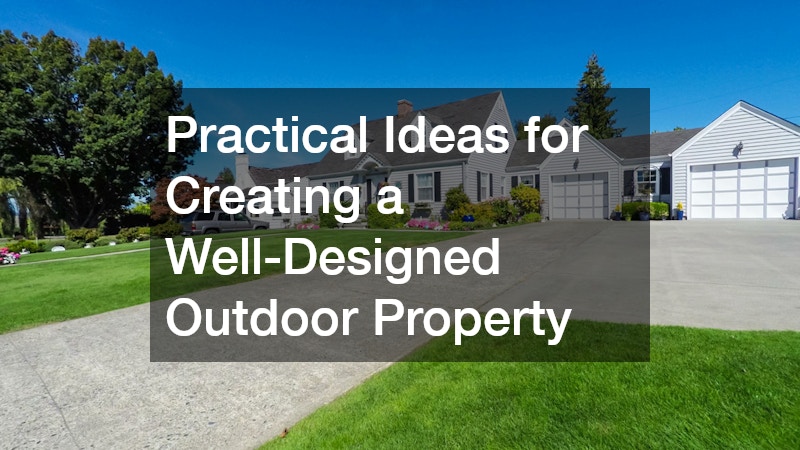
A well-designed outdoor property should do more than look attractive from the street. It should support how you use your home, provide safe and comfortable spaces, and remain manageable as the seasons change. Whether you are improving a small backyard or redesigning an entire property, thoughtful planning can help you make better decisions about plants, pathways, hard surfaces, privacy, and maintenance.
The best results usually come from treating the entire exterior as one connected space. Instead of adding features one at a time, consider how each improvement will interact with the rest of the property. With a practical approach, you can create an outdoor environment that is visually appealing, functional, and suited to your long-term needs.
Start With a Detailed Property Assessment

Before purchasing plants or choosing materials, take time to understand the property you already have. Walk around the entire exterior and make notes about existing trees, slopes, drainage concerns, lawn conditions, structures, paved areas, and frequently used spaces.
Pay attention to how sunlight changes throughout the day. An area that appears sunny in the morning may be shaded by the house or mature vegetation later. Similarly, water may collect in areas that are not immediately obvious after a dry period.
A basic property assessment should consider:
- Areas that receive full sun, partial shade, or consistent shade
- Existing trees and plants worth preserving
- Low spots where water collects
- Steep or difficult-to-maintain slopes
- Existing patios, walkways, and driveways
- Places where people regularly enter or move through the property
- Views that should be emphasized or screened
- Areas that require additional privacy
- Features that need repair or replacement
Professional tree services can also be useful when evaluating mature vegetation. An assessment can help determine whether trees are healthy, creating potential hazards, interfering with structures, or simply positioned poorly for the property’s current layout.
Starting with this information gives you a clearer foundation for every subsequent decision. It can also prevent the common mistake of installing an attractive feature in a location where it later creates drainage, maintenance, or access problems.
Define How You Want to Use Each Outdoor Area
A beautiful yard is not necessarily a functional yard. Before deciding what to install, think about how you want to spend time outdoors.
For example, a family may need an open lawn for recreation, a patio for entertaining, and a quiet area for relaxing. Someone who enjoys gardening may want dedicated planting beds, while another homeowner may prioritize low-maintenance spaces.
Try dividing the property into functional zones based on actual activities. Consider:
- Outdoor dining
- Entertaining guests
- Gardening
- Children’s play
- Pet activities
- Relaxation
- Vehicle parking
- Storage
- Walking and circulation
- Privacy
Once these purposes are established, it becomes easier to determine how much space each area should receive. Frequently used zones should be easy to access, while less active areas can be reserved for ornamental planting or natural features.
Also consider how people will move between spaces. A patio that looks attractive but requires walking through a planting bed to reach it will quickly become inconvenient. Good design accounts for movement as carefully as it considers appearance.
Create a Balanced Planting Strategy
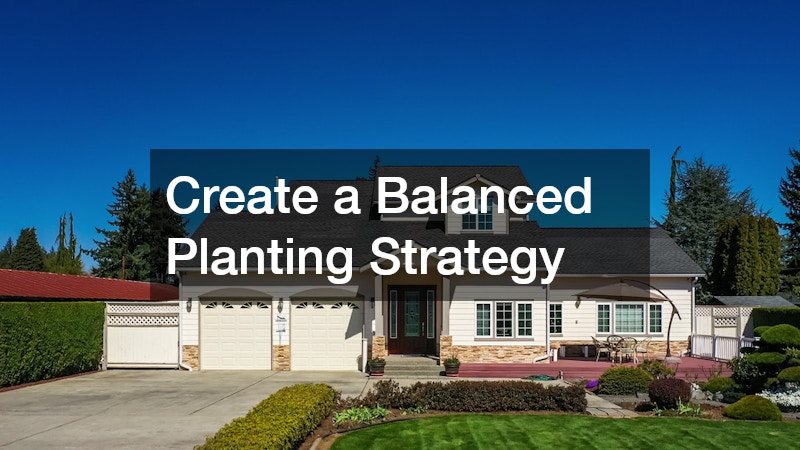
Plants provide color, texture, shade, privacy, and visual interest, but they should be selected according to the conditions of the property. Avoid choosing plants solely because they look appealing at a garden center.
Consider mature size, sunlight requirements, soil conditions, water needs, and seasonal appearance. A small tree or shrub may eventually become much larger than expected, creating conflicts with roofs, windows, utility lines, or paved surfaces.
Tree removals may sometimes be necessary when vegetation has become hazardous, severely damaged, diseased, or poorly positioned. Removing a problematic tree can create opportunities to redesign an area, improve sunlight, or protect nearby structures.
When planning new plantings, aim for variety without creating visual clutter. A balanced landscape might combine:
- Taller trees for structure and shade
- Medium-height shrubs for screening
- Flowering plants for seasonal color
- Ground cover for low-growing interest
- Lawn or open areas for usable space
- Evergreen plants for year-round structure
Think about how the property will look during different seasons, not just immediately after installation. A planting plan with multiple textures and seasonal changes can remain attractive throughout the year.
Maintain Trees With Purpose
Mature trees can become some of the most valuable features on an outdoor property. They can frame a home, provide shade, create privacy, and give a landscape a sense of maturity. However, they also require thoughtful maintenance.
When inspecting trees, look for dead or damaged branches, excessive growth, branches interfering with structures, and growth that obstructs important sightlines. Do not assume that cutting as much as possible will improve the tree. Excessive cutting can damage its appearance and health.
Experienced tree trimmers can evaluate branches and growth patterns while considering the overall form of the tree. Proper maintenance should focus on addressing legitimate concerns while preserving healthy structure whenever possible.
Property owners should also avoid treating every tree the same way. Different species have different growth habits and maintenance requirements. The age, location, and condition of a tree can also affect what work is appropriate.
Regular inspections can make maintenance more manageable. Addressing smaller problems before branches become hazardous or growth interferes with buildings can reduce the likelihood of larger complications later.
Build a Practical Long-Term Maintenance Plan
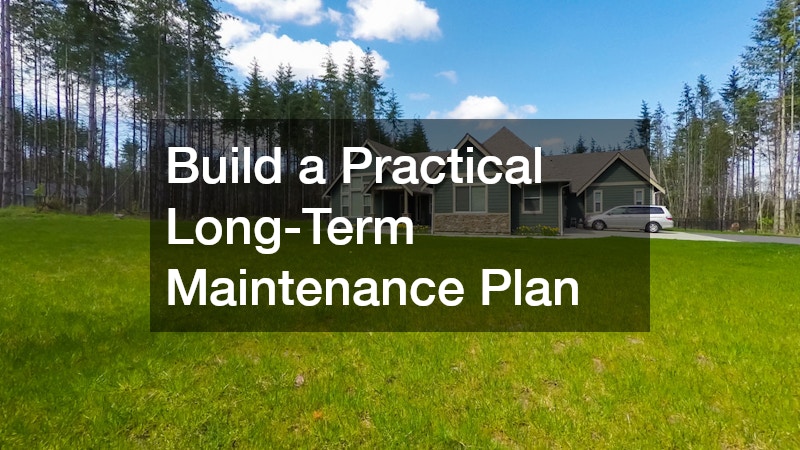
A landscape should be designed with maintenance in mind from the beginning. Even an impressive installation can become difficult to manage if plants are too crowded, lawns are oversized, or features are positioned in hard-to-reach areas.
Tree pruning services can be incorporated into a broader maintenance schedule when specialized tree work is necessary. Regular attention can help maintain appropriate clearance, manage growth, and keep mature vegetation from overwhelming other elements of the property.
Create a simple maintenance calendar that accounts for recurring tasks such as:
- Mowing and lawn care
- Seasonal planting
- Mulching
- Weeding
- Irrigation checks
- Leaf and debris removal
- Tree inspections
- Pruning
- Hardscape cleaning
- Fence and surface inspections
Not every task needs to happen at the same frequency. Organizing responsibilities by season can make upkeep less overwhelming.
It is also important to design for the amount of maintenance you are realistically willing to perform. A highly intricate garden may look appealing in theory but become frustrating if it requires more attention than you can provide.
Connect Different Areas With Clear Visual Transitions
A property can contain several different zones without feeling disconnected. The key is to establish visual relationships between them.
Repeating certain materials, plant varieties, textures, or colors throughout the property can make separate areas feel like parts of one design. For example, a particular stone used around a patio could also appear as a garden border or walkway accent.
Pathways are another effective way to connect spaces. They should lead people naturally from one destination to another while providing enough room for comfortable movement.
Consider the relationship between:
- The front entrance and driveway
- The driveway and backyard
- The patio and garden
- The lawn and planting beds
- Outdoor living spaces and the home
- Fencing and surrounding vegetation
Transitions do not have to be dramatic. Small changes in paving, edging, plant height, or surface texture can help define separate areas while maintaining a cohesive appearance.
Avoid giving every zone a completely different style. Too many unrelated materials or design themes can make a property look pieced together rather than intentionally planned.
Choose Outdoor Features That Match Your Property
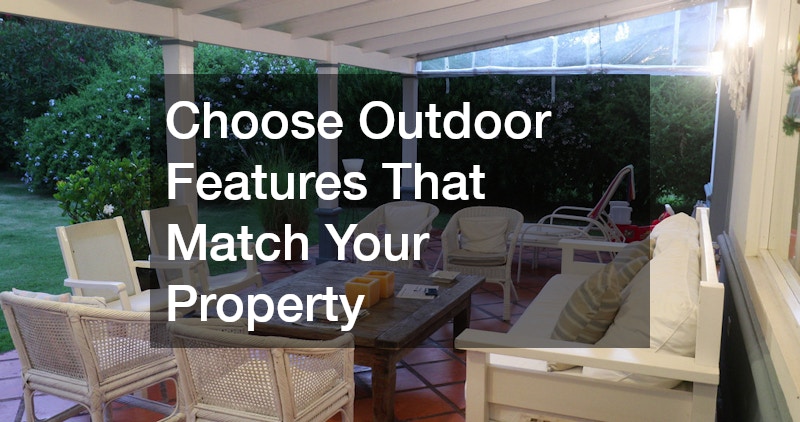
Outdoor improvements should complement the home’s architecture, surrounding environment, and existing features. A large decorative element may look impressive on its own but feel out of place when compared with the scale of the property.
Local landscapers can help evaluate how different improvements will work together. A professional perspective can be especially useful when a project involves several components, such as planting, grading, outdoor living areas, and hardscape features.
Before choosing an outdoor feature, ask:
- Does it serve a practical purpose?
- Is it appropriately sized for the property?
- Does it complement the home’s appearance?
- Will it be easy to maintain?
- Will it still be useful several years from now?
- Does it work with existing features?
- Does installation create drainage or access concerns?
This approach can help prevent unnecessary additions. Outdoor design does not require filling every available space. Sometimes leaving open areas creates a stronger sense of balance.
Improve Functionality With Purposeful Outdoor Features
A successful property combines visual appeal with practical performance. Landscape services can address a range of needs while helping individual features work together.
For example, a planting improvement may also help define a walkway, while a properly designed outdoor living area can provide both entertainment space and a transition between the house and yard.
When considering improvements, prioritize problems that affect everyday use. Uneven walking surfaces, poor drainage, limited privacy, difficult access, and inadequate shade may be more important than purely decorative changes.
A practical approach can involve completing improvements in stages. Start with essential repairs and functional changes before investing in decorative features.
This also allows you to evaluate how each phase affects the rest of the property. Once a new patio, planting area, or pathway is installed, you may discover that another area needs less work than originally expected.
Design Hardscaped Areas Around Everyday Activities
Hardscaping can provide structure and usability, but paved areas should be planned carefully. Patios, walkways, retaining walls, steps, and other features need to work with the property’s existing grade and drainage patterns.
A hardscaping contractor can help determine appropriate layouts, materials, and construction approaches for more complex projects. Before installing a hard surface, consider how water will move across and around it.
Think about the activities each hardscape area needs to support. A small seating area may require very different dimensions from a patio designed for large gatherings. Likewise, a narrow decorative walkway may not be appropriate for a route that experiences frequent foot traffic.
When planning these areas:
- Keep walking routes logical
- Allow enough room around furniture
- Consider drainage before construction
- Select surfaces appropriate for expected traffic
- Coordinate materials with existing features
- Avoid unnecessary pavement
- Account for future maintenance
The goal is to create hardscaped areas that make the property easier and more enjoyable to use rather than simply increasing the amount of paved space.
Use Stone to Add Structure and Visual Interest
Natural-looking materials can make outdoor spaces feel more established and connected to their surroundings. Landscape stone can be used in garden borders, pathways, retaining features, decorative beds, and other areas where additional texture is desirable.
Choose materials based on more than color. Size, texture, durability, installation requirements, and compatibility with existing surfaces all matter.
Stone can also be useful for defining transitions. A border can separate a lawn from a planting bed, while a stone pathway can establish a clear route through a garden.
Avoid using too many unrelated stone types throughout one property. Repeating a material in several locations can create continuity.
Plants can also soften the appearance of stone. Combining hard materials with greenery creates contrast while preventing large areas of stonework from appearing overly rigid.
Before installation, consider the foundation beneath the material and how water will move through the area. Proper preparation can influence how well the finished feature performs over time.
Make the Driveway Work With the Entire Property
The driveway is often one of the largest visible hard surfaces on a residential property. Because of this, its appearance and layout can have a significant effect on overall curb appeal.
A driveway contractor can help address practical considerations such as grading, drainage, width, access, and surface installation. These factors should be considered alongside appearance rather than treated as separate concerns.
Think about how vehicles enter and leave the property. Is there enough turning room? Are pedestrians able to reach the entrance safely? Does landscaping interfere with visibility?
You can also soften the visual impact of a large driveway with strategically placed planting beds, trees, or borders. However, vegetation should not interfere with vehicle clearance or sightlines.
Coordinate driveway materials with nearby walkways and other hardscape elements. Consistent materials can make the entire front exterior feel more intentional.
Create Privacy Without Making the Yard Feel Closed In
Privacy is important for many outdoor properties, but completely enclosing a yard can make it feel smaller and darker. Instead, consider layering different elements.
A fence can establish the primary boundary, while shrubs, trees, and other plantings can soften the appearance. Strategic placement can provide privacy exactly where it is needed without blocking every view.
A fence contractor can help determine appropriate placement, height, materials, and configuration based on the property’s needs. Before installation, consider:
- Which areas actually require privacy
- Whether the fence will block sunlight
- How it will affect views
- Whether vegetation can soften the boundary
- How the fence will coordinate with the home
- How much maintenance the surrounding planting will require
Privacy does not have to mean complete visual separation. Partial screening can often create a more open and comfortable environment while still giving occupants a sense of seclusion.
Creating a well-designed outdoor property requires more than choosing attractive plants or installing new surfaces. The strongest results come from understanding how the property is used, planning around existing conditions, and selecting improvements that balance appearance, functionality, safety, and maintenance.
By evaluating the property carefully, creating useful outdoor zones, coordinating materials, improving drainage, and planning for long-term upkeep, homeowners can build exterior spaces that remain practical and attractive for years. The key is to think beyond individual projects and develop an outdoor environment where every element has a purpose and works naturally with the features around it.