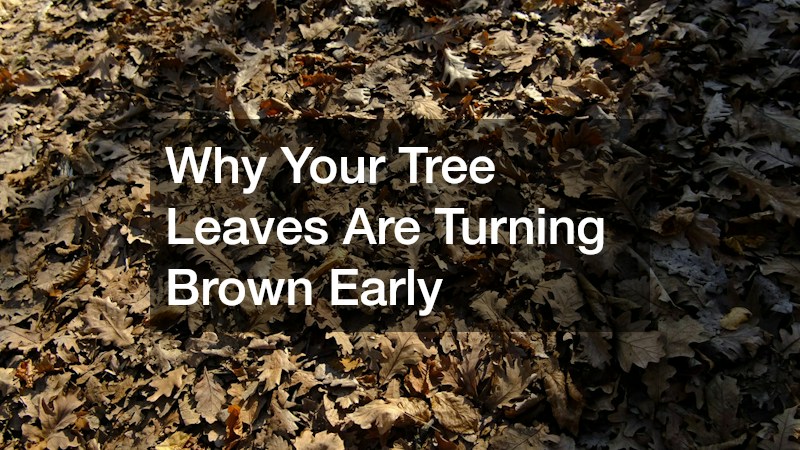
Few things disrupt the beauty of a lush yard faster than noticing your foliage turning crisp, brown, and scorched while summer is still in full swing. When foliage turns brown long before the true onset of autumn, it serves as a clear distress signal from your tree. Trees rely on vibrant green leaves to perform photosynthesis, convert sunlight into vital carbohydrates, and build up energy reserves necessary to survive the harsh winter ahead. When those leaves turn brown prematurely, the tree’s energy cycle is interrupted, leaving it vulnerable to long-term decline, severe pest infestations, or structural weakness.
Understanding why your canopy is shifting colors ahead of schedule requires looking closely at soil conditions, environmental stressors, and potential underlying disease. Early leaf browning can stem from simple cultural missteps, such as improper watering habits, or deeper physiological issues like root suffocation, fungal pathogens, or nutrient deficiencies. In this comprehensive guide, we will explore the primary reasons why your foliage is turning crisp prematurely and outline practical, actionable solutions to help restore your landscape to optimal health.

Adjust Soil Moisture Levels With Deep Root Hydration Methods
One of the most common causes of early leaf browning is moisture stress, which can occur from both underwatering and overwatering. When a tree experiences severe drought, it conserves water by shutting down fluid transport to its outer leaves, leading to crisp, brown leaf margins that eventually drop off. Conversely, overwatering saturates the soil and starves the root system of oxygen, causing roots to rot and preventing them from absorbing water, which produces a deceptively similar brown, wilted appearance across the canopy.
To determine whether water stress is the culprit, perform a simple soil moisture check by digging four to six inches into the ground beneath the tree canopy. The soil should feel moist like a wrung-out sponge, rather than bone-dry or waterlogged. Implementing deep root watering—delivering water slowly at the drip line rather than blasting the trunk—ensures that moisture reaches the active feeder roots. If you are unsure how to balance your watering schedule for mature trees, consulting professional tree services can help establish an optimal hydration routine based on your specific soil type and local weather patterns.
To build a resilient watering routine, focus on these targeted adjustments throughout the growing season:
-
Monitor soil depth: Always check moisture levels at least six inches below the surface before applying additional water.
-
Water at the drip line: Direct irrigation toward the edge of the branch canopy where active absorption roots reside, rather than near the main trunk.
-
Use slow-drip irrigation: Utilize soaker hoses or drip lines to allow water to penetrate deeply into the soil profile without running off.
-
Adjust for seasonal shifts: Increase watering frequency during hot, dry spells, and reduce applications during cool or rainy weeks.
When professional guidance is integrated into your routine, maintaining proper moisture balance becomes much easier. Qualified teams offering a comprehensive tree care service can evaluate your soil structure, install specialized root irrigation systems, and provide custom care recommendations to ensure your yard thrives through every season.
Identify and Eliminate Common Fungal Pathogens Promptly
Fungal diseases are a major driver of premature leaf browning and leaf drop across many popular tree species. Diseases such as anthracnose, leaf spot, powdery mildew, and apple scab thrive in cool, damp spring conditions, establishing themselves within the leaf tissue long before symptoms become obvious in late summer. As the fungus spreads, it creates dark spots or blotches that expand until entire leaves turn brown, shrivel, and fall off prematurely.
Treating fungal pathogens requires a multi-pronged approach focused on sanitation and prevention. Begin by raking up and disposing of all fallen leaves during autumn, as fungal spores overwinter in plant debris and reinfect fresh spring growth. Improving sunlight penetration through careful selective thinning also helps foliage dry quickly after rain. For persistent or widespread fungal outbreaks, scheduling professional tree pruning services helps eliminate infected branches cleanly, reducing the risk of spreading fungal spores throughout the rest of your canopy.
Maintain Balanced Soil Nutrients and Correct pH Imbalances
Nutrient deficiencies frequently show up in foliage as premature discoloration, interveinal chlorosis, or brown leaf margins. When essential elements like nitrogen, iron, or magnesium are lacking in the soil, trees cannot produce sufficient chlorophyll to maintain healthy green leaves. Additionally, an incorrect soil pH can chemically bind these nutrients, rendering them completely unavailable to the root system even if they are physically present in the dirt.
A detailed soil test is the best first step to diagnose underlying nutrient issues and measure pH levels accurately. Applying slow-release organic fertilizers customized to your soil’s specific deficiency will gradually restore balanced nutrition. For complex soils or trees exhibiting severe nutrient lockout, hiring a licensed tree contractor ensures that root-zone fertilizations are applied at precise depths and dosages to correct imbalances without burning delicate root tissues.

Apply Organic Mulch Correctly to Shield Shallow Root Systems
Extreme soil temperature fluctuations and rapid moisture loss directly contribute to root stress and premature foliage browning. Shallow feeder roots are especially sensitive to intense summer heat and sudden cold snaps. Placing a layer of organic mulch over the root zone acts as a protective thermal blanket, regulating soil temperature, suppressing competitive weeds, and locking in vital moisture for the root system.
However, improper mulching techniques can cause more harm than good. Pile mulch too high against the base of the trunk—a common mistake known as “mulch volcanoes”—and you trap excess moisture against the bark, encouraging fungal rot, bark decay, and rodent infestation. Apply a two- to four-inch layer of shredded bark or wood chips across the root zone, keeping it pulled back three to four inches away from the trunk. For large properties or naturalized areas, utilizing forestry mulching provides an efficient way to convert cleared brush into nutrient-rich ground cover that protects healthy trees while enriching the surrounding soil naturally.
Properties with extensive forested areas or overgrown brush benefit significantly from structured land management:
-
Clears competing brush: Removes invasive undergrowth that competes with established trees for water and light.
-
Recycles organic matter: Converts woody debris into coarse mulch that naturally breaks down into nutrient-rich topsoil.
-
Prevents soil erosion: Maintains ground cover across slopes to reduce soil washouts and shield vulnerable surface roots.
-
Improves property access: Creates clean pathways and clear zones for ongoing maintenance and tree health monitoring.
Integrating these land management practices creates a healthier overall ecosystem for your landscape. Utilizing high-quality organic mulch, whether produced on-site or brought in, ensures your trees retain the moisture they need to keep their leaves vibrant throughout the warmest months of the year.
Prune Away Dead Wood to Restore Proper Canopy Airflow
Dense, overgrown tree canopies create microclimates characterized by high humidity, poor light penetration, and stagnant air—ideal conditions for foliage diseases and premature browning. When inner branches are starved of light and airflow, their leaves naturally yellow, turn brown, and drop off early. Furthermore, dead, damaged, or diseased wood draws energy away from healthy growth while providing an entry point for wood-boring insects.
Regular maintenance pruning removes crowded inner branches, opens up the canopy to sunlight, and restores balanced air movement throughout the tree. Removing dead wood prevents pathogens from spreading into the heartwood and structural limbs. Engaging a trusted local tree trimming service ensures that pruning cuts are made correctly at the branch collar, promoting fast wound closure and preventing long-term decay.
Manage Insect Pests Before They Cause Irreversible Defoliation
Insect infestations are another major cause of early leaf browning and defoliation. Pests such as spider mites, Japanese beetles, scale insects, and aphid colonies feed on sap and leaf tissue, disrupting the transport of fluids and nutrients. Spider mites, for instance, pierce individual leaf cells to extract juices, giving foliage a bronzed or stippled brown appearance before causing leaves to drop entirely.
Effective pest management relies on early detection and targeted treatments rather than blanket chemical sprays. Inspect the undersides of discolored leaves regularly for tiny webbing, sticky honeydew residues, or visible insects. Beneficial insects like ladybugs and lacewings often keep pest populations in check naturally, but severe infestations may require systemic treatments or organic insecticidal soaps. Consulting experienced tree trimming services allows you to identify specific pests accurately and implement tailored control strategies that protect both the tree and the surrounding ecosystem.
When dealing with recurring insect pressure, a structured inspection routine helps catch problems before major damage occurs:
-
Inspect leaf undersides: Check weekly during peak heat for webbing, tiny spots, or sticky residues.
-
Use sticky traps: Position monitoring traps in upper branches to detect pest emergence early in the spring.
-
Encourage natural predators: Avoid broad-spectrum sprays that kill off beneficial insects like predatory mites and ladybugs.
-
Apply targeted sprays: Use dormant oils or insecticidal soaps during early growth stages to target soft-bodied pests without harming foliage.
By maintaining a vigilant pest control plan, you protect leaf integrity throughout the hot summer months. Catching infestations early ensures that your tree retains its full foliage crown, allowing it to continue storing energy right up until the natural onset of fall.
Reduce Root Zone Soil Compaction Using Aeration Techniques
Soil compaction is a silent stressor that severely impacts tree health, often manifesting as thinning canopies and early leaf loss. Heavy foot traffic, lawn equipment, and construction activities compress soil particles, eliminating the porous spaces that hold air and water. Without adequate oxygen, tree roots cannot respire or absorb nutrients efficiently, leading to decline that shows up first in the upper canopy.
Alleviating soil compaction around established trees requires specialized aeration methods to restore soil porosity without tearing up the root system. Vertical mulching and air-spading are two highly effective techniques that fracture compacted soil and insert organic matter into the root zone. Seeking professional tree care service options allows property owners to utilize air-spading technology, which uses compressed air to loosen soil safely around delicate roots without causing mechanical damage.
Safeguard Vulnerable Trunks and Roots From Lawn Care Equipment Damage
Mechanical damage caused by lawnmowers and string trimmers is a primary, yet preventable, cause of premature tree decline. Repeatedly hitting the base of a tree strips away the outer bark and damages the cambium layer beneath—the vital tissue responsible for transporting water and nutrients between roots and leaves. Once this vascular pathway is severed, branches above the injury suffer from water starvation, causing leaves to turn brown and drop early.
Establishing a protective mulch ring around the base of every tree is the simplest and most effective way to prevent equipment damage. A properly placed mulch ring eliminates the need to mow or edge close to the trunk, creating a safe buffer zone. If a tree has already suffered significant bark injury, hiring a professional tree contractor can help assess the extent of cambial damage, clean up torn bark, and apply protective measures to prevent secondary fungal infections.
Safely Remove Severely Diseased or Structurally Hazardous Trees
While many causes of early leaf browning can be treated and reversed, there are times when browning indicates systemic failure, advanced root rot, or structural death. If a tree loses more than half of its canopy year after year, shows extensive trunk decay, or exhibits severe root structural failure, it may no longer be viable. Dying trees become significant hazards, especially during high-wind events or winter storms when weakened branches can collapse onto nearby structures.
When a tree becomes an immediate threat or is beyond recovery, removal is often the safest and most responsible course of action. Attempting to take down a large, compromised tree without professional equipment and training carries extreme personal safety and property risks. Working with a reputable tree removal service guarantees that hazardous trees are taken down safely, efficiently, and in compliance with local regulations and safety standards.
When evaluating damaged or declining trees across your property, consider the following critical factors:
-
Degree of canopy loss: Trees losing more than 50% of their foliage annually rarely recover full vigor.
-
Structural trunk decay: Deep cavities, fungal conks, or hollow trunks signal severe internal decay.
-
Root stability: Cracked soil or severe root lifting on the windward side indicates structural root failure.
-
Proximity to hazards: Compromised trees standing near homes, power lines, or walkways pose immediate safety risks.
Recognizing when a tree has reached the end of its life protects both your property and the surrounding landscape. Relying on professional tree removals ensures that dying trees are dismantled safely using crane technology, rigging systems, and trained crew members to protect nearby structures and healthy vegetation.
Protect Foliage Against Heat Stress and Environmental Scorching
Extreme summer heat, intense solar radiation, and drying winds often combine to cause environmental leaf scorch. Scorch occurs when leaves lose moisture through transpiration faster than the roots can pull water from the soil. This issue is especially common on newly planted trees, non-native species, or trees situated near heat-radiating surfaces like concrete driveways, asphalt streets, and stone patios.
Mitigating environmental heat stress involves providing physical protection and enhancing soil moisture retention. Installing shade cloths over young, vulnerable saplings during heatwaves reduces solar stress significantly. Additionally, applying anti-desiccant sprays can help minimize water loss through leaf pores during extreme heatwaves. When unseasonal weather or unexpected storms damage stressed branches, scheduling prompt storm damage tree removal helps clear broken limbs, reducing overall stress on the tree and allowing it to focus its energy on recovery.
Restoring Canopy Health for Years to Come
Early leaf browning is an unmistakable call for attention from your trees. Whether caused by summer drought, nutrient imbalances, fungal pathogens, or compacted soil, identifying the root cause quickly gives your landscape the best chance for full recovery. By taking a proactive approach—adjusting watering practices, applying mulch properly, and ensuring optimal soil nutrition—you can resolve minor stressors before they lead to permanent canopy decline.
When tree issues extend beyond basic maintenance, partnering with qualified arborists and professional tree specialists ensures your landscape receives the precise care it needs. Timely intervention not only resolves current foliage problems but also strengthens root systems against future environmental challenges. By prioritizing preventative care today, you ensure that your trees remain vibrant, healthy, and resilient for many seasons to come.