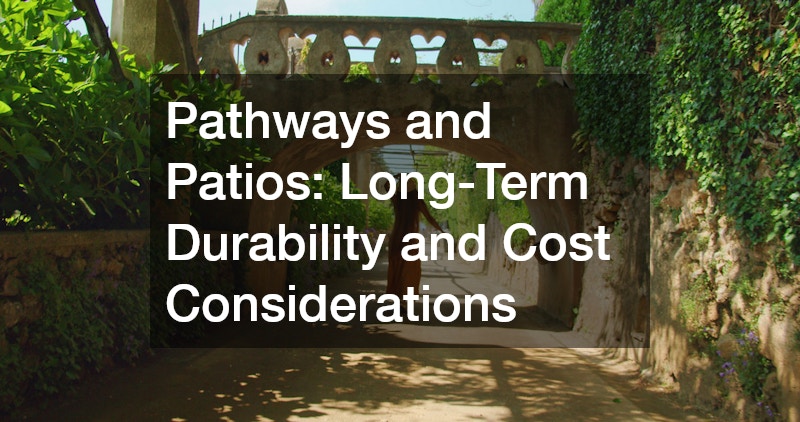
Few home upgrades get walked on, sat on, and rained on quite like a pathway or patio, which means these surfaces have to work harder than almost anything else outside your house. Choosing the wrong material or cutting corners on installation can lead to cracking, shifting, and expensive repairs within just a few years. This guide breaks down what actually affects long-term durability and cost so you can plan an outdoor space that holds up for decades instead of seasons. Whether you are starting from scratch or replacing an aging surface, understanding these factors will help you avoid costly mistakes.
Picking Materials That Last for Decades
The material you choose for a pathway or patio is the single biggest factor in how long it will last and how much upkeep it will need. Poured concrete is affordable and durable but can crack over time if the base was not prepared correctly. Natural stone and pavers cost more upfront but tend to age gracefully and are easier to repair piece by piece rather than replacing an entire slab. Climate also plays a role, since freeze-thaw cycles in colder regions can stress certain materials more than others.
- Poured concrete works well for budget-conscious projects but requires proper reinforcement to resist cracking.
- Natural stone offers a high-end look and excellent longevity, though it comes at a premium price.
- Interlocking pavers allow for easier spot repairs without redoing the whole surface.
- Gravel and decomposed granite are low-cost options but need periodic refreshing.
- Stamped concrete gives the appearance of stone at a lower price point but can wear faster in high-traffic areas.
What Drives the Cost of a New Walkway or Patio
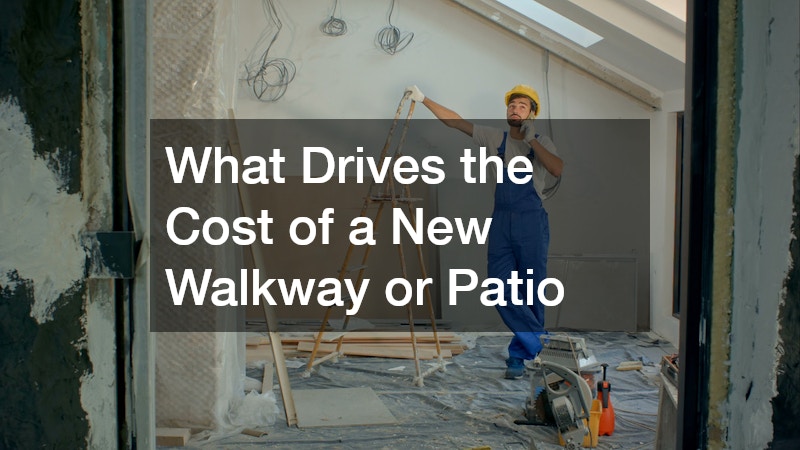
Material selection is only part of the total cost equation. Labor, site preparation, grading, and the complexity of the design all factor into the final price tag, and these variables can shift the total project cost by thousands of dollars even when the same paver or stone is used.
Excavation depth typically needs to run 6 to 12 inches, depending on soil type and climate, with a compacted gravel base beneath sand and pavers to prevent shifting. Curved layouts, intricate patterns, or multi-level patios also add labor hours that straight, single-tier designs don’t require.
Many homeowners underestimate how much site prep matters, since a poorly graded or compacted base is one of the leading causes of premature cracking and settling. Skipping proper compaction to save a few hundred dollars upfront often leads to uneven surfaces and costly repairs within just a few years.
Several factors influence what you’ll actually pay for a new walkway or patio, and material choice is usually the biggest swing. Poured concrete typically runs $6 to $12 per square foot installed, pavers land in the $10 to $20 range, and natural stone can climb well past $25 per square foot once cutting and fitting are factored in. Site conditions matter too — steep grades, poor soil, or existing tree roots can add significant excavation and base preparation costs before any decorative material is even laid.
If you are building a new home or planning a larger renovation, it often makes sense to loop in your home builder early so hardscaping is factored into the overall site plan rather than added as an afterthought. This is especially true when patios connect to the home’s foundation or when walkways need to align with utility lines, downspouts, or future landscaping. Retrofitting these details after construction is complete almost always costs more than designing for them upfront.
Similarly, working with general contractors who understand load-bearing requirements and drainage slopes can prevent issues that would otherwise surface years down the road, such as pooling water, heaving pavers, or cracked concrete. A proper base — typically four to six inches of compacted gravel — and a slope of about one-quarter inch per foot for drainage are small details that make a big difference over time. Skipping these steps to save money upfront often leads to expensive repairs within just a few years.
Getting multiple quotes and asking for a breakdown of labor versus materials will help you understand where your money is actually going. Labor often accounts for 40 to 60 percent of the total project cost, depending on the complexity of the design and site accessibility. Ask each contractor how they price permits, cleanup, and disposal of old materials as well, since these line items can vary widely and are easy to overlook when comparing bids.
Why Proper Drainage Extends the Life of Your Hardscape
Water is the number one enemy of any outdoor surface, and poor drainage is behind a large percentage of patio and pathway failures. When water pools instead of flowing away from the structure, it can erode the base material, cause heaving during freezes, and lead to cracking over time. Even a well-installed paver patio can start to sink or shift within a few years if water is allowed to collect beneath it.
Most experts recommend a slope of about 1/4 inch per foot, directing water away from the house and toward a safe discharge point like a lawn, garden bed, or storm drain. This slight grade is barely noticeable to the eye but makes a significant difference in how quickly water clears the surface after a storm. Without it, standing water can seep into joints and seams, undermining the compacted base beneath pavers or concrete slabs.
Freeze-thaw cycles make the stakes even higher in colder climates. Water that seeps into the base material and then freezes will expand, pushing pavers or slabs upward and creating uneven, tripping-prone surfaces. Over multiple winters, this heaving can turn a smooth patio into a cracked, wavy mess that requires costly repairs or full replacement.
Combining proper slope with well-placed drainage channels, French drains, or permeable jointing sand adds another layer of protection. These features intercept water before it has a chance to settle, giving it a clear path away from your hardscaping rather than allowing it to soak in unchecked. Investing in this kind of drainage planning upfront is far less expensive than repairing sunken pavers or replacing a heaved concrete pathway down the road.
It is also worth thinking about how your patio or pathway interacts with the rest of your property’s drainage system rather than treating it as an isolated surface. If downspouts empty directly onto a walkway, or nearby soil erodes into a drain, you may eventually need drain cleaning services to clear blockages that were never designed to handle that extra runoff. A single downspout can dump 600 gallons of water during a one-inch rainstorm, and if that volume is funneled onto hardscape instead of a proper drainage bed, it accelerates erosion, staining, and settling.
Simple design choices make a significant difference. Sloping a patio away from the house at a rate of roughly 1/4 inch per foot, installing channel drains at the base of steps, or routing downspouts into buried extensions that daylight well beyond the paved area can all prevent water from pooling where it shouldn’t. Grading, French drains, and permeable joint sand between pavers are inexpensive additions during construction but costly retrofits afterward.
Neglected drainage issues compound over time. Standing water that seeps beneath a patio can wash out the base material, leading to sinking, shifting pavers, or cracked concrete within just a few years. Addressing drainage during the design phase is far cheaper than fixing a sunken patio, replacing a cracked slab, or calling in emergency drain cleaning services once soil erosion has already clogged your system.
Designing Pathways and Patios Around Pool Areas
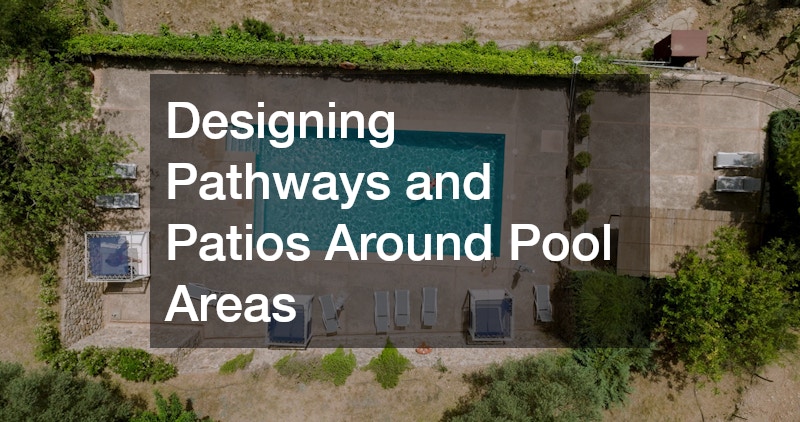
Outdoor surfaces near a pool face unique challenges, including constant moisture, chemical exposure, and foot traffic from wet, bare feet. Materials chosen for these areas need to be slip-resistant and able to withstand chlorine or saltwater splashes without staining or degrading. Many homeowners work directly with pool companies during the planning stage to make sure the surrounding hardscape is built to handle these specific conditions.
- Textured pavers or brushed concrete reduce slipping risk around wet areas.
- Light-colored materials stay cooler underfoot during hot summer days.
- Proper edging prevents pool water from washing out surrounding soil or gravel.
- Non-porous materials resist staining from chemicals and sunscreen residue.
Balancing Hardscaping With Other Outdoor Structures
Patios and pathways rarely exist in isolation, and thinking about how they interact with fences, gates, and property lines can prevent costly rework later. If you are planning both a new patio and a fence, coordinating the timeline can save money on excavation and grading work that overlaps between the two projects. Many fencing companies are happy to collaborate with hardscape installers to make sure gate placement and pathway routes line up logically.
It is also worth considering how outdoor structures affect long-term maintenance access. A pathway that runs too close to a fence line can make it difficult to perform routine repairs or repaint wood fencing without stepping on delicate pavers or stonework. Planning these elements together from the start leads to a more cohesive and functional yard.
Comparing Outdoor Project Costs to Indoor Renovations
It can be helpful to put patio and pathway costs into perspective by comparing them to other home renovation projects you may already be familiar with. A mid-range patio, for example, might run between $3,000 and $8,000 depending on materials like pavers, natural stone, or stamped concrete, while a full kitchen remodel often starts at $25,000 and can climb well past $50,000. That same patio budget frequently lines up closely with the price of updating a smaller bathroom, which typically falls in the $6,000 to $15,000 range once fixtures, tile, and labor are factored in.
Homeowners who have worked with a bathroom remodeling company before will recognize similar cost drivers at play in outdoor projects. Material quality matters just as much outside as it does indoors—natural stone pavers cost significantly more than basic concrete slabs, much like porcelain tile outpaces standard ceramic in a bathroom. Labor rates also follow a similar pattern, since skilled installers charge more for intricate patterns or custom layouts than for straightforward, uniform designs.
Complexity of design is another shared factor. Just as a bathroom remodel with a curved shower enclosure or custom vanity costs more than a basic swap-out, a patio with curved edges, multi-level seating areas, or built-in fire features will command a higher price than a simple rectangular slab. Recognizing these parallels can help homeowners set realistic budgets and know which upgrades are worth the added expense.
Roofing is another useful comparison point, since both roofs and patios are long-term investments that protect and enhance your property. A well-installed asphalt shingle roof typically lasts 20 to 25 years, while a properly built paver or concrete patio can last 25 to 30 years or more—but only if the groundwork is done right. Just as a residential roofing company will emphasize the importance of proper materials and installation techniques to avoid leaks, the same logic applies to hardscaping, where cutting corners on base preparation leads to expensive problems later.
Consider the parallels: a roofer who skips proper underlayment risks water infiltration and rot within just a few years, while a contractor who skimps on gravel base depth or compaction invites cracking, sinking, and drainage issues in a patio. In both cases, the visible surface material—shingles or pavers—is only as good as what lies beneath it. Spending an extra few hundred dollars upfront on quality base materials or flashing can save thousands in repair costs down the road.
Thinking of your patio as an investment with a similar lifespan expectation to major home systems can help you budget more realistically. Just as homeowners plan for roof replacement every couple of decades, setting aside a modest reserve for patio maintenance, resealing, or joint sand replenishment every few years will keep the space performing well and looking its best for the long haul.
Learning From How Other Home Systems Are Built to Last
Durability principles that apply to patios and pathways are not so different from those used in other major home systems. Industrial hvac systems, for example, are designed with careful attention to load calculations, ventilation, and long-term wear, and that same principle of planning for stress over time applies directly to outdoor hardscaping exposed to weather and foot traffic. A patio built without accounting for freeze-thaw cycles or heavy usage patterns will fail early, much like an HVAC system sized incorrectly for a building’s needs.
Roofing installation offers another useful parallel, since a roof’s lifespan depends heavily on the quality of the underlying structure and materials, not just the visible surface layer. The same is true for patios and pathways, where the base layer beneath the surface matters just as much as the pavers or concrete on top. Homeowners who understand this concept tend to make smarter decisions about where to invest in quality versus where they can save.
Planning for Utilities and Power Needs in Outdoor Living Spaces
Modern outdoor living spaces often include more than just seating and walkways, with features like lighting, water features, and outdoor kitchens becoming increasingly common. These additions require careful electrical planning, and homeowners installing backup power systems sometimes coordinate with a generator installer to make sure outdoor circuits are protected during outages. Running conduit and wiring underneath a patio before the hardscaping is installed is far easier and cheaper than trying to retrofit it later.
Thinking ahead about utility needs also helps avoid having to tear up a finished patio to add features down the road. Even if you do not plan to add electrical features immediately, laying conduit during initial construction gives you flexibility for future upgrades. This kind of forward planning is one of the most overlooked ways to save money over the life of an outdoor space.
Maintenance Habits That Protect Your Investment
Even the most durable materials need regular maintenance to reach their full lifespan potential. Sealing pavers or concrete every few years helps protect against stains, moisture penetration, and UV damage. Sweeping debris out of joints and reapplying polymeric sand as needed prevents weeds and keeps the surface stable underfoot.
- Reseal concrete or paver surfaces every two to three years depending on climate exposure.
- Remove weeds and debris from joints before they cause shifting or cracking.
- Inspect for cracks or settling each spring and address small issues before winter.
- Keep gutters and downspouts clear so runoff does not pool near hardscaped areas.
- Power wash surfaces gently to avoid stripping sealant or damaging softer stone.
Building a patio or pathway that lasts for decades comes down to smart material choices, proper drainage, and thoughtful planning around the rest of your property. Taking the time upfront to consider these factors will save you money and frustration compared to dealing with cracks, settling, or drainage problems later. As you move forward, gather multiple quotes, ask detailed questions about site preparation, and think about how your outdoor space fits into your broader home maintenance plan. A little extra research now will pay off in years of worry-free enjoyment of your outdoor space.