
Highlights:
- Native plants can slash your outdoor water use by up to 60% compared to conventional turfgrass — and in a humid, shaded yard where evaporation is already slow, many of these plants can sustain themselves on rainfall alone after their first season.
- Shade is an asset, not a problem. Humid, shaded yards are the natural home of woodland natives like Wild Ginger, Solomon’s Seal, and native ferns — plants that evolved under forest canopies and actually perform better in your conditions than in full sun.
- The first growing season is the only time these plants need you. Consistent watering during establishment is the one real ask. After that, mulch, leaf litter, and natural rainfall do the rest — no irrigation system required.
- Your shade garden can be a pollinator hub. White Wood Aster alone draws specialist bees and butterflies in late summer and fall, hosting Pearl Crescent and Checkerspot butterfly larvae — proof that shady yards can support serious wildlife, not just greenery.
- How you source plants matters as much as which plants you choose. Local-seed-source natives are better adapted to your specific regional conditions than the same species grown elsewhere. Your state’s native plant society and the NWF’s Native Plant Finder (searchable by zip code) are the best places to start.
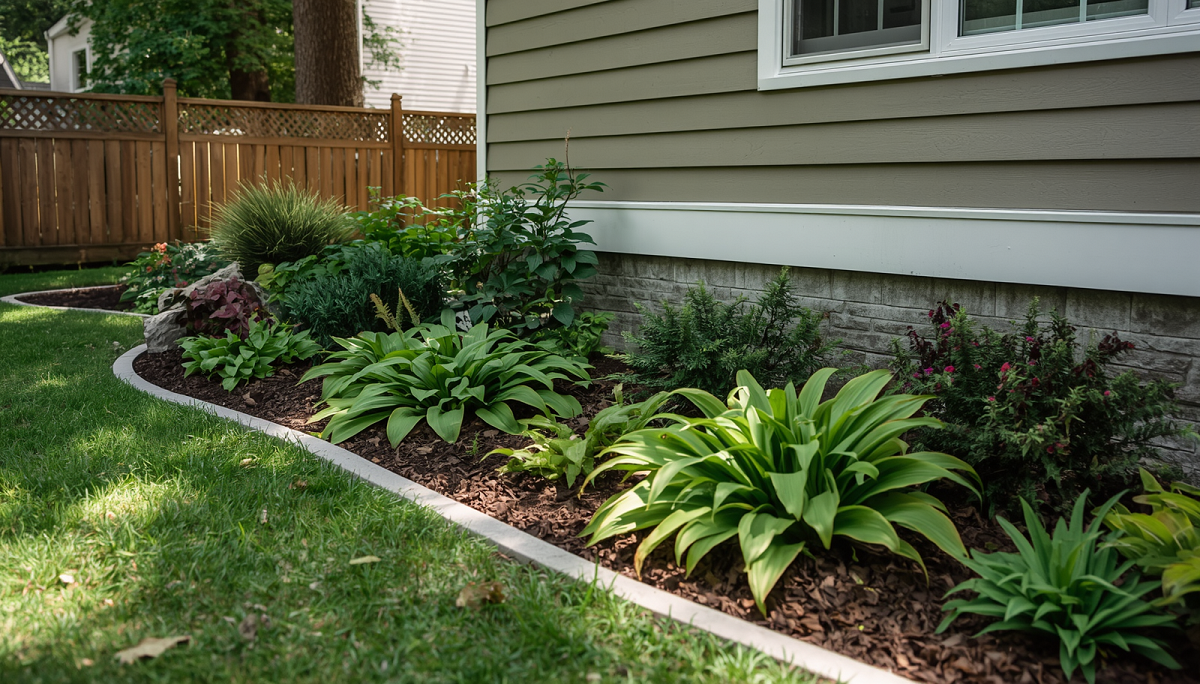
You’ve got a shady yard. Maybe it’s tucked under a canopy of old oaks, hemmed in by a fence line, or simply north-facing and never quite catching the sun. Add in a humid climate — think the Southeast, Mid-Atlantic, Pacific Northwest, or Great Lakes region — and you’ve got a growing situation that most mainstream gardening advice completely ignores.
Here’s the thing, though: that shady, humid corner of yours is actually a goldmine for one of the most exciting categories of plants around — native woodland species. These plants evolved under forest canopies for thousands of years. They’re not fighting your conditions. They love them. And once they’re established, most of them want nothing from you in the way of irrigation.
This article breaks down the five best native plants for exactly this scenario, backed by current research and data, and gives you the practical guidance to actually get them in the ground and thriving.
Why Native Plants Are the Smart Choice — Backed by the Numbers
Before we get into the plant list, let’s talk about why native matters, because it’s not just an ecological talking point. It has very real consequences for your water bill and your Saturday mornings.
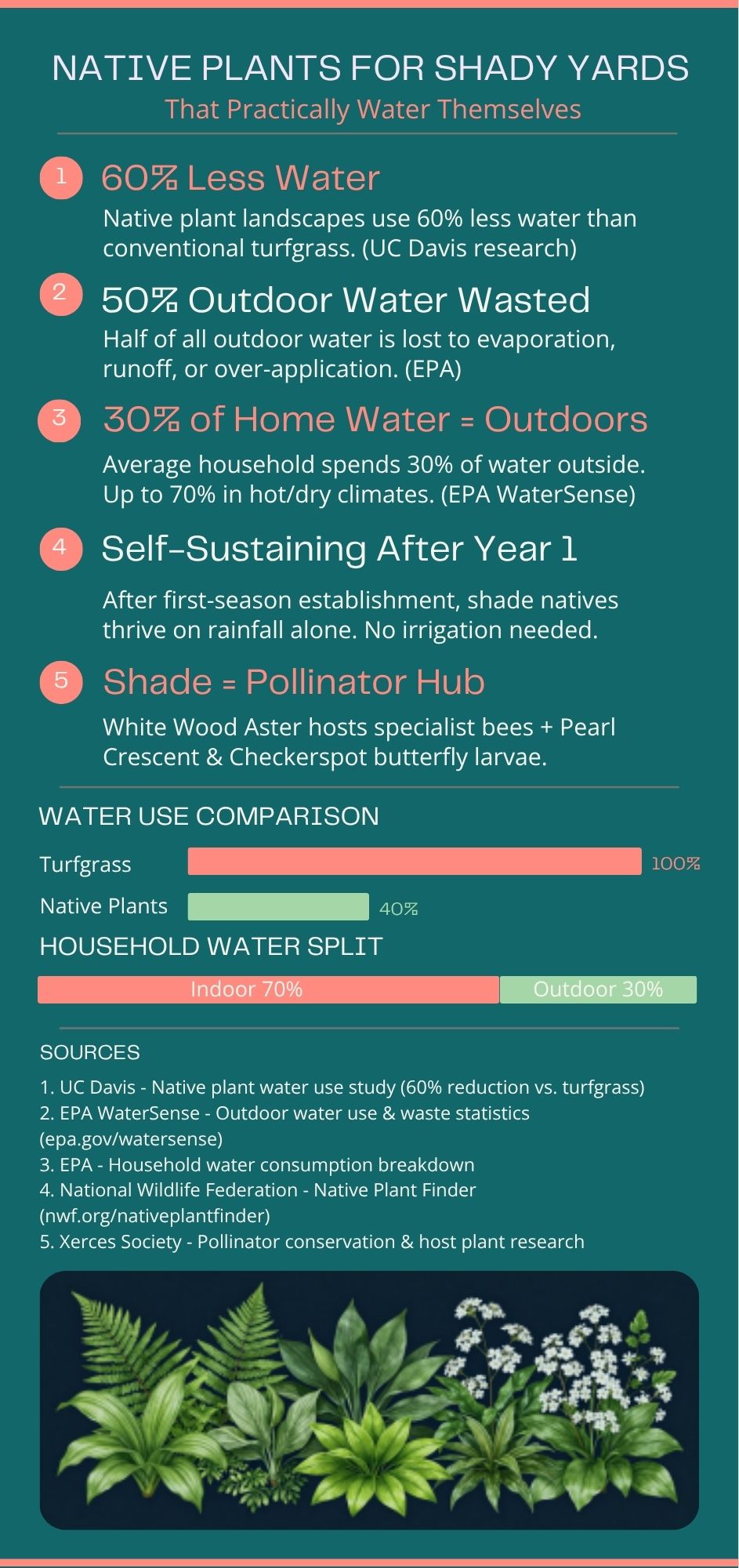
Here’s a sobering statistic to start with: residential outdoor water use across the United States accounts for nearly 8 billion gallons of water per day, with landscape irrigation making up the vast majority of that figure. According to the EPA’s WaterSense program, on average, a single-family home uses about 30 percent of its total water consumption outdoors — and in hotter, drier parts of the country, that figure can climb to 70 percent or more.
What makes that number even more frustrating? The EPA estimates that roughly 50 percent of that outdoor water is wasted — evaporated, run off the sidewalk, or simply over-applied to plants that didn’t need it in the first place.
Now here’s where native plants come in. Research from the University of California, Davis found that native plant landscapes use an estimated 60 percent less water than conventional turfgrass under comparable conditions. That’s not a marginal improvement — that’s a fundamental transformation in how your yard interacts with its local water cycle.
In a humid climate, the math gets even better. Shaded areas stay cooler and retain soil moisture longer because evaporation is slower than in open sun. You’re not fighting the elements — you’re working with them. A native groundcover or woodland perennial in a humid, shaded yard in Virginia or Georgia or Oregon can genuinely sustain itself on rainfall alone after its first growing season.
That’s the deal we’re chasing. Let’s look at the five plants that deliver it.
1. Wild Ginger (Asarum canadense): The Low-Maintenance Groundcover Champion
If you’ve been hunting for a lush, weed-suppressing groundcover for a shaded spot, Wild Ginger deserves to be at the top of your list. It’s a native North American perennial — native to the forests of eastern North America — and it behaves in shade the way grass behaves in full sun: it spreads steadily, knits together into a solid mat, and crowds out weeds without much encouragement.
Wild Ginger thrives in moist shade and spreads readily via underground rhizomes, making it one of the few true “set it and forget it” groundcovers for woodland gardens. The leaves are large, heart-shaped, and a deep, velvety green — handsome in all four seasons, and semi-evergreen in milder climates. The flowers are quirky little burgundy cups hidden near the soil surface in early spring, mostly invisible but beloved by early pollinators.
In humid climates, Wild Ginger’s deep preference for consistent soil moisture becomes an asset rather than a liability. Your naturally humid air and shaded soil will keep the moisture levels it needs without you dragging out a hose. Combine it with Solomon’s Seal (more on that below) and a layer of leaf mulch, and you’ve got a genuinely self-sustaining woodland floor.
Key specs:
- Light: Part shade to full shade
- Water needs: Low once established in humid climates
- Height: 6–12 inches
- Spread: Slow to moderate via rhizomes
- Best for: Eastern US, Midwest
One note: Wild Ginger is toxic if ingested in large quantities, so keep it in mind if you have pets or small children who like to chew on things.
2. Solomon’s Seal (Polygonatum biflorum): Elegant, Architectural, and Indestructible
If Wild Ginger is the workhorse groundcover, Solomon’s Seal is the showpiece. This native perennial produces graceful arching stems — anywhere from one to four feet tall depending on the variety — lined with alternating oval leaves. In spring, small bell-shaped white flowers dangle elegantly beneath each stem. In fall, those flowers give way to blue-black berries that birds absolutely love, and the foliage turns a warm golden yellow before dying back.
Solomon’s Seal is easy to grow and spreads slowly by underground rhizomes under ideal conditions, naturalizing gradually into a colony that becomes more beautiful every year. It’s genuinely deer-resistant, which matters enormously in many humid suburban and semi-rural settings where Bambi treats gardens like a buffet.
What makes it particularly relevant here is its water tolerance profile. Solomon’s Seal handles both consistently moist soil and periodic dry spells once established, which is exactly the range you get in a humid climate with variable rainfall. It’s also unfazed by root competition — meaning it can hold its own under the drip line of established trees where little else will grow.
In practical terms: plant it in groups of five to seven along a shaded fence line or under a deciduous canopy, and do nothing else. In two or three years, you’ll have a colony that makes your yard look like something from a professional garden tour.
Key specs:
- Light: Part shade to full shade
- Water needs: Low to medium; drought-tolerant once established
- Height: 1–4 feet
- Spread: Slow rhizomatous spread
- Best for: Eastern US, Midwest, Pacific Northwest
3. White Wood Aster (Eurybia divaricata): The Pollinator Powerhouse of the Shade Garden
Most people think shade gardens can’t support pollinators. White Wood Aster is here to prove that wrong.
This native woodland perennial is something of a late-season miracle worker. By the time summer is fading and most garden flowers have given up, White Wood Aster erupts in a cloud of small white daisy-like flowers with yellow centers — typically from late August through October. Bees, butterflies, and beneficial insects descend on it in numbers that will genuinely surprise you.
A hardy, low-growing woodland perennial, the White Wood Aster thrives in both damp and dry areas in partial to full shade, making it drought tolerant. It self-seeds and spreads via rhizomes to form large semi-evergreen mounds in otherwise challenging areas — including dry shade, which is often the hardest gardening condition of all. Small native bees and butterflies are reliably drawn to its flowers, and it serves as a host plant for Pearl Crescent and Checkerspot butterflies.
This is where the ecological stakes become clear. Research published in Urban Ecosystems (2024) and summarized by the Washington Park Arboretum Foundation found that native plants had a measurable positive effect on urban butterfly and moth abundance, richness, and diversity. The majority of butterfly and moth species are specialists — they rely on specific native plant genera to complete their life cycles. White Wood Aster isn’t just a garden plant; it’s functional habitat infrastructure.
In a small shady yard, a patch of White Wood Aster along a back fence or under a tree is doing double (or triple) duty: filling a dead zone with attractive greenery, contributing to late-season bloom, and supporting a surprising web of local wildlife.
Key specs:
- Light: Part shade to full shade
- Water needs: Very low; tolerates both moist and dry shade
- Height: 1–2 feet
- Spread: Self-seeds and spreads by rhizomes
- Best for: Eastern US, Southeast, Midwest
4. Native Ferns (Cinnamon, Ostrich, or Wood Fern): The Structural Backbone
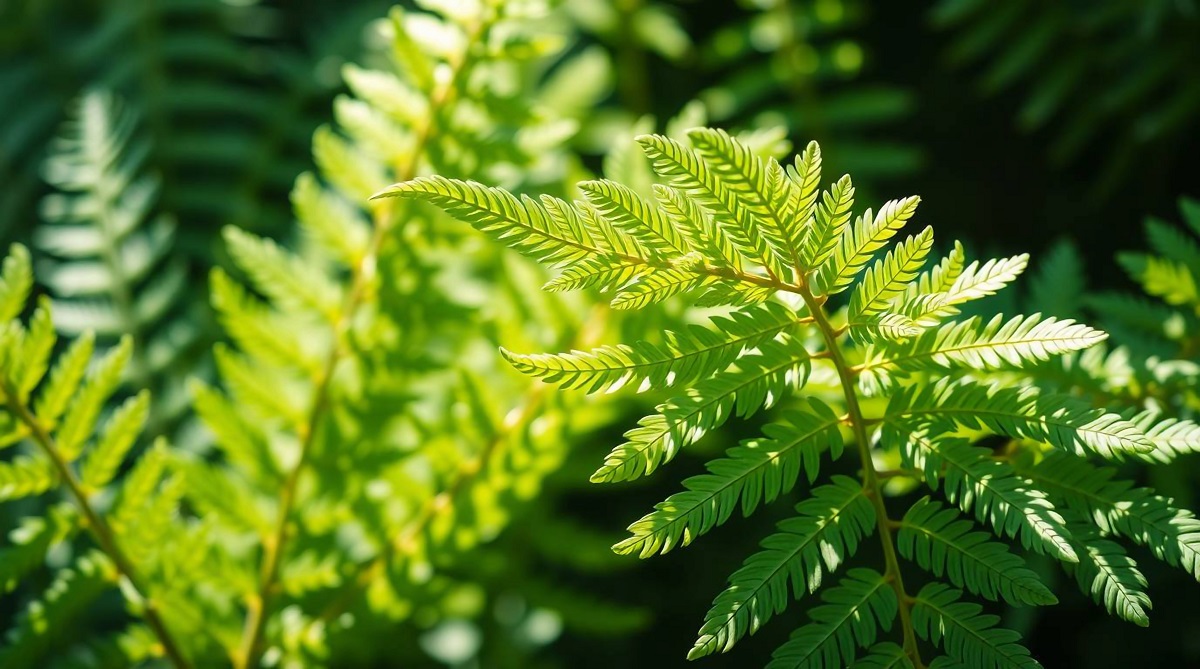
No list of native shade plants is complete without ferns, and in humid climates they are genuinely unbeatable. But let’s be specific, because “fern” covers hundreds of species and the differences matter.
For small shady yards in humid climates, three native species stand out:
Cinnamon Fern (Osmundastrum cinnamomeum)
One of the most striking native ferns, with dramatic upright fronds that can reach four to five feet and distinctive cinnamon-colored fertile fronds in the center of each clump. It handles wet soil exceptionally well — a plus in humid climates with heavy summer rainfall — and provides stunning fall color as the fronds age to gold. It pairs beautifully with Solomon’s Seal and Wild Ginger in a layered planting.
Ostrich Fern (Matteuccia struthiopteris)
Named for the way its tall, vase-shaped fronds resemble ostrich plumes, this fern is a spreader — give it room or contain it with edging. It’s native to moist woodlands throughout central and eastern North America and is particularly cold-hardy. This fern grows best in partial to full shade with medium-moisture, well-drained soil and provides year-round structure as a low-maintenance plant.
Wood Fern (Dryopteris marginalis or D. intermedia)
The most shade-tolerant and drought-resilient of the three, making it a great choice for yards with dryer patches of shade. Semi-evergreen in mild climates, it stays green well into winter and provides valuable texture when everything else has died back.
What unites all three is their deep evolutionary adaptation to exactly the conditions you have: humid air, dappled shade, and soil enriched with organic matter. These ferns evolved under forest canopies. Your shady humid yard isn’t a problem to solve — it’s their native habitat.
From a design standpoint, ferns are the structural backbone around which everything else is built. They provide height, movement, and textural contrast. Plant them in clumps of three to five, tuck Wild Ginger at their feet, let Solomon’s Seal arch through the mid-layer, and finish with a White Wood Aster at the back, and you’ve got a four-season shade garden that manages itself.
Key specs (general for the species above):
- Light: Part shade to full shade
- Water needs: Low to medium in humid climates; Cinnamon Fern tolerates wet soil
- Height: 2–5 feet depending on species
- Best for: Eastern US, Midwest, Pacific Northwest
5. Woodland Sunflower (Helianthus divaricatus): Breaking the Rules in the Best Way
Here’s the one that surprises people: a sunflower that actually grows in shade.
Woodland Sunflower is a native North American perennial that challenges the assumption that all sunflowers need full sun. While most sunflowers crave full sun, the North American native woodland sunflower thrives in shady gardens. Reaching heights of up to six feet, it works beautifully when planted in clusters or used as a vibrant backdrop for mixed flower beds.
This matters a lot in small shady yards because it gives you something that most shade-tolerant natives don’t: height, summer bloom, and bright yellow color. The flowers arrive from July through September — filling the gap between the spring show put on by Solomon’s Seal and the fall performance of White Wood Aster. Pollinators go absolutely wild for it.
What makes it fit this article is its water profile. Like most native sunflowers, the Woodland Sunflower develops a substantial root system that accesses deep soil moisture. Once established, it needs essentially no supplemental irrigation in humid climates. It’s also rhizomatous, spreading into a colony over time — useful in larger areas, manageable with a spade in smaller ones.
The South Carolina Native Plant Society recommends pairing it with White Wood Aster and Cinnamon Fern in “dry high shade” situations — under established oaks or pines with dappled high shade, where root competition makes conventional gardening nearly impossible. That’s an incredibly useful combination for anyone with a shaded yard dominated by mature trees.
Key specs:
- Light: Part shade (best), tolerates high or dappled shade
- Water needs: Low once established; drought-tolerant
- Height: 3–6 feet
- Spread: Rhizomatous; can colonize over time
- Best for: Eastern US, Southeast, Midwest
How to Actually Get These Plants Established
Native plants are famously low-maintenance once established, and that caveat deserves emphasis. The first season is the one where you need to pay attention.
Soil Prep
Most woodland natives prefer rich, well-draining soil with plenty of organic matter — the stuff you get when leaf litter accumulates over time. Before planting, amend your soil with compost if it’s compacted or sandy. If you’re planting under established trees, go easy on digging to avoid damaging roots; a thin layer of compost top-dressed around the planting area is usually sufficient.
Mulch Generously
A 2–3 inch layer of shredded leaf mulch or wood chip mulch is the single best thing you can do for shade-loving natives. It retains moisture, moderates soil temperature, suppresses weeds, and mimics the forest floor environment these plants evolved in. Skip the dyed wood chips and use shredded leaves from your own yard if possible — free and ecologically appropriate.
Water During Establishment
Even drought-tolerant natives need consistent moisture during their first growing season while their root systems develop. In a humid climate, this might mean supplemental watering once a week during dry stretches in the first year. After that, rainfall typically handles everything.
Plant in Clusters, Not Singles
One Wild Ginger plant in a corner looks sparse and lonely. Fifteen of them spreading into a groundcover mat look intentional and beautiful. Most of these plants are inexpensive, especially when purchased from local native plant nurseries or native plant society sales. Go for mass planting from the start if your budget allows.
Source Locally
This is worth repeating. Plants grown from local seed stock are better adapted to your specific regional conditions than the same species grown from seed sourced in another part of the country. Check your state’s native plant society for vetted nurseries. The National Wildlife Federation’s Native Plant Finder — built on Dr. Douglas Tallamy’s research — lets you search by zip code to find which native species will have the most ecological impact in your specific location.
The Bigger Picture: Your Yard as Ecosystem
There’s a tendency to think of a garden as just decoration — something to look at. But if you’re in a humid climate with mature trees and a shady yard, you’re sitting on an opportunity to do something genuinely meaningful.
Research by entomologist Doug Tallamy has shown that a native oak tree alone can support the caterpillars of over 500 species of butterflies and moths. Those caterpillars, in turn, are the critical food source for over 96 percent of songbirds during nesting season. The National Wildlife Federation’s Native Plant Finder, built on Tallamy’s data, makes the case clearly: planting native species in your yard restores the ecological connections that industrial landscaping has severed.
Your five White Wood Asters aren’t just filling a dead zone under a tree. They’re feeding specialist bees, supporting butterfly larvae, and providing seeds for birds heading into winter.
The EPA’s WaterSense program puts it in straightforward economic terms: a well-managed landscape can reduce irrigation water use by 15 percent or more annually — and when you replace thirsty conventional plants with native species that need no supplemental watering after establishment, the savings multiply. In a humid climate, where rainfall already does much of the heavy lifting, native woodland plants can bring your garden irrigation needs close to zero.
That’s good for the water bill. It’s good for the wildlife. And honestly, it’s good for your weekends — because these plants, once established, genuinely take care of themselves.
Final Thoughts
If there’s one mindset shift this article is trying to make, it’s this: stop thinking of a small, shady, humid yard as a limitation and start seeing it as a specific ecosystem with specific plant solutions.
The mainstream gardening industry has spent decades selling us plants that were never meant to grow in our conditions — thirsty perennials bred for sunny borders, ornamental grasses that need full exposure, and lawn turf that was essentially designed for a climate that doesn’t exist in most of North America. The result is yards that are expensive to maintain, ecologically empty, and perpetually struggling.
Native woodland plants flip that entirely. Wild Ginger, Solomon’s Seal, White Wood Aster, native ferns, and Woodland Sunflower aren’t compromises or consolation prizes for a “difficult” yard. They’re genuinely beautiful, structurally interesting plants that happen to also be perfectly matched to your conditions, nearly free of maintenance demands once established, and actively beneficial to the local ecosystem.
The other thing worth saying: you don’t have to do this all at once. Start with one corner. Plant a cluster of Solomon’s Seal under a tree that’s been a dead zone for years. Add a few White Wood Asters along a shaded fence. Let Wild Ginger creep in as a groundcover at the base of your foundation. Each small planting compounds over time — spreading, self-seeding, and building soil health — until what started as a few plants becomes a coherent, living landscape.
That’s the quiet power of going native. You do a little work upfront, and the garden does the rest. In a humid shaded yard, with the right plants, that’s not a fantasy. It’s just good horticulture.
Quick-Reference: Your Humid Shade Garden Plant List
| Plant | Light | Water Need | Height | Key Feature |
| Wild Ginger | Part–Full Shade | Very Low | 6–12 in | Dense groundcover mat |
| Solomon’s Seal | Part–Full Shade | Low–Medium | 1–4 ft | Elegant arching structure |
| White Wood Aster | Part–Full Shade | Very Low | 1–2 ft | Late-season pollinator magnet |
| Native Ferns (Cinnamon/Ostrich/Wood) | Part–Full Shade | Low–Medium | 2–5 ft | Structural backbone |
| Woodland Sunflower | Part Shade | Low | 3–6 ft | Summer color and height |